

Produktkonsultation
Din e-mailadresse vil ikke blive offentliggjort. Påkrævede felter er markeret *
Before picking a door style, the frame structure sets the tone for the entire enclosure — it affects price, installation complexity, and how much visual weight the glass carries in the room. Three categories cover almost everything on the market.
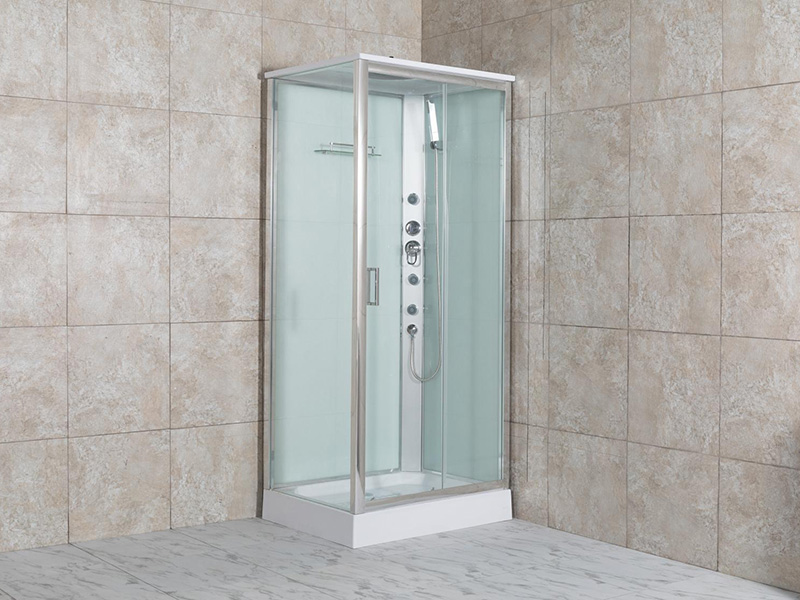
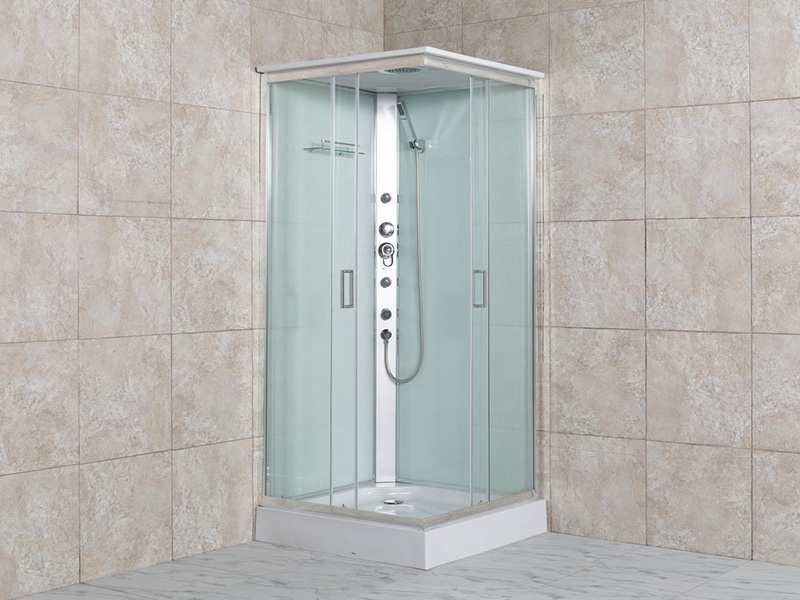
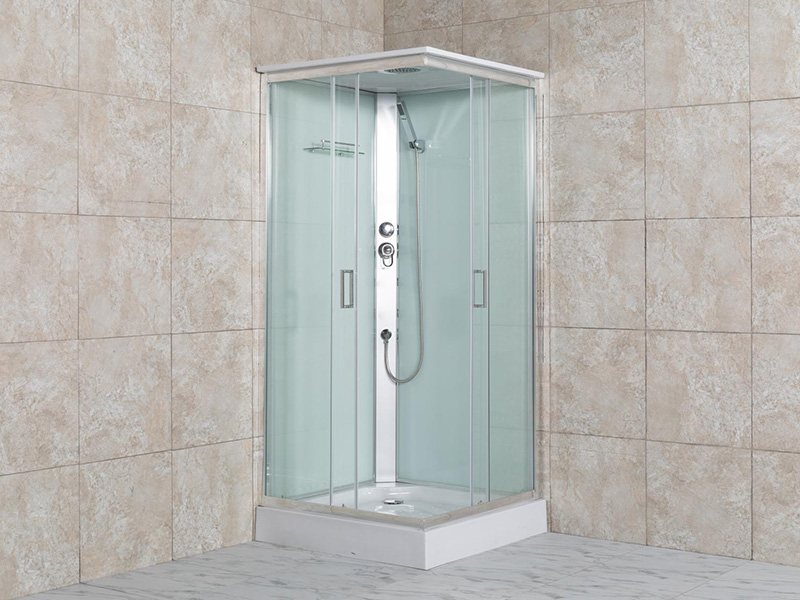
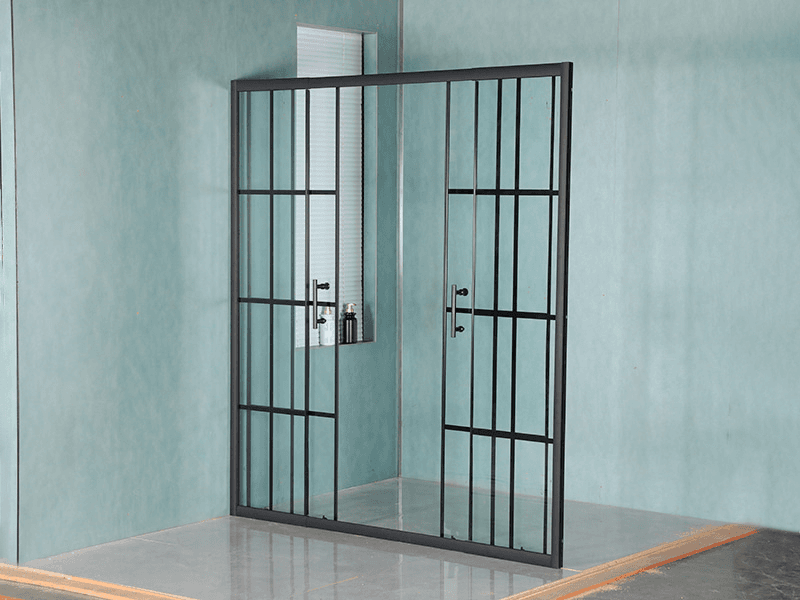
Framed enclosures wrap every glass edge in aluminum or stainless-steel channels. The metal does double duty: it stiffens thinner glass (often 4-5mm) and absorbs minor wall-alignment issues during installation, which keeps labor costs down. The tradeoff is visual bulk and tracks that collect grime if not wiped regularly.
Semi-frameless enclosures frame only the outer perimeter — wall jambs and the top rail — while door edges and the leading edge of fixed panels stay bare. This needs thicker glass (typically 6-8mm) to stand on its own without warping, but the payoff is a noticeably cleaner sightline at roughly the mid-range price point.
Frameless enclosures drop metal framing almost entirely, relying on 8-10mm tempered glass held by minimal clamps and hinges. The glass itself becomes the structural element, which means tighter manufacturing tolerances and more careful on-site measurement — but the result is the closest thing to an invisible barrier.
Frame style determines how an enclosure looks; door operation determines how it behaves day to day — and this is usually where space constraints make the decision for you.
Sliding doors run on a top track, with one or more panels passing behind a fixed panel. Because the door doesn't swing into the room, sliding shower enclosure systems for compact bathrooms are the default choice wherever floor space in front of the shower is tight — alcove showers, en-suites, and corner installations all favor this layout.
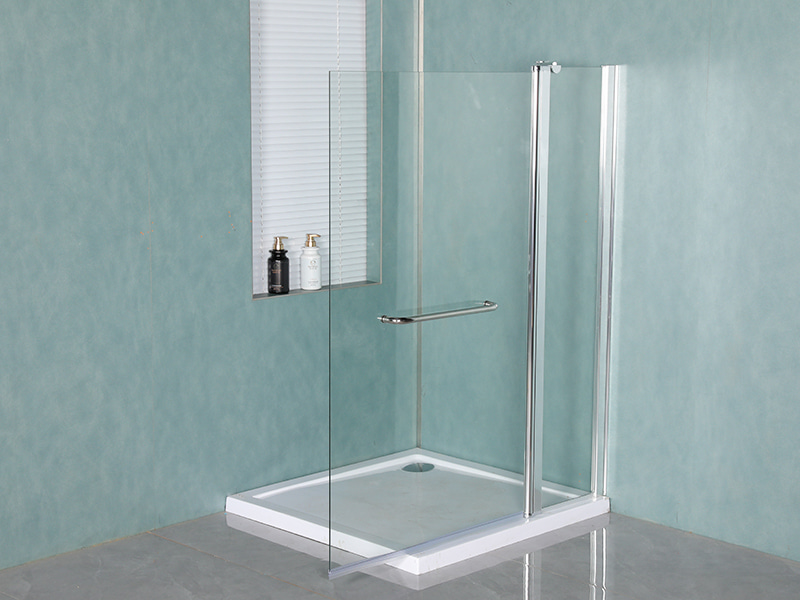
Pivot and hinged doors swing on a vertical axis, much like a standard interior door. They open a wider, unobstructed entry — useful for larger showers or anyone who finds reaching into a sliding track awkward — but they need clearance in the bathroom for the swing arc. pivot-opening shower enclosure designs also tend to seal more tightly against the frame than sliding panels, since the door compresses against a gasket rather than overlapping a track.
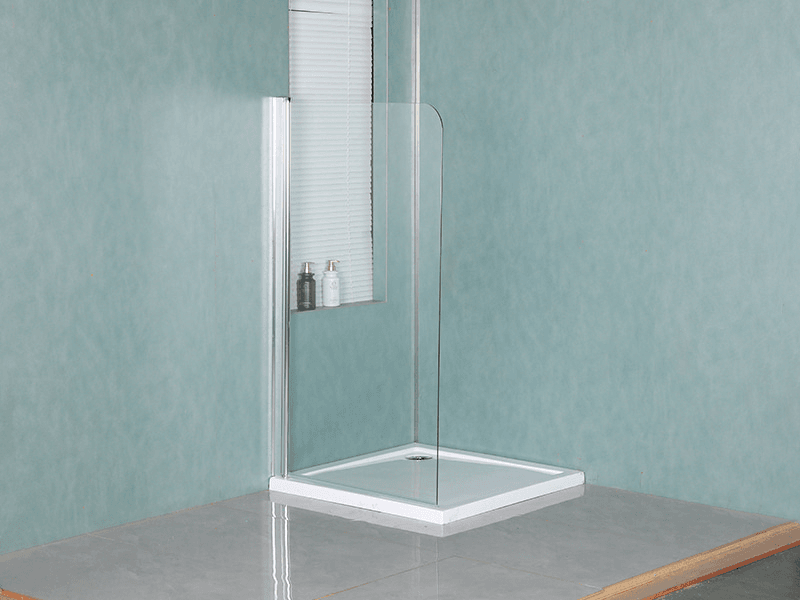
Walk-in and doorless layouts use one or two fixed glass panels positioned to block splash without a door at all. There's nothing to slide, swing, or latch — just an open gap sized to the showerhead's spray pattern. walk-in shower partitions for an open, doorless layout suit larger bathrooms and barrier-free designs, where step-free access matters as much as the look.
Bath shower screens are a special case: rather than enclosing a separate shower stall, they pivot or slide above the rim of a bathtub, converting it into a shower-capable space without a full renovation.
Putting frame construction and door operation together makes it easier to map a bathroom's constraints onto a realistic shortlist.
| Type | Frame Style | Space Required | Relative Cost | Best For |
|---|---|---|---|---|
| Sliding enclosure | Framed or semi-frameless | No swing clearance needed | Low–Mid | Alcove and corner showers |
| Pivot/hinged enclosure | Semi-frameless or frameless | Door swing arc | Mid–High | Larger walk-in stalls |
| Walk-in partition | Frameless | Open splash zone | Mid–High | Spacious or accessible bathrooms |
| Bath shower screen | Framed or semi-frameless | Fits over existing tub | Low | Combined tub-shower setups |
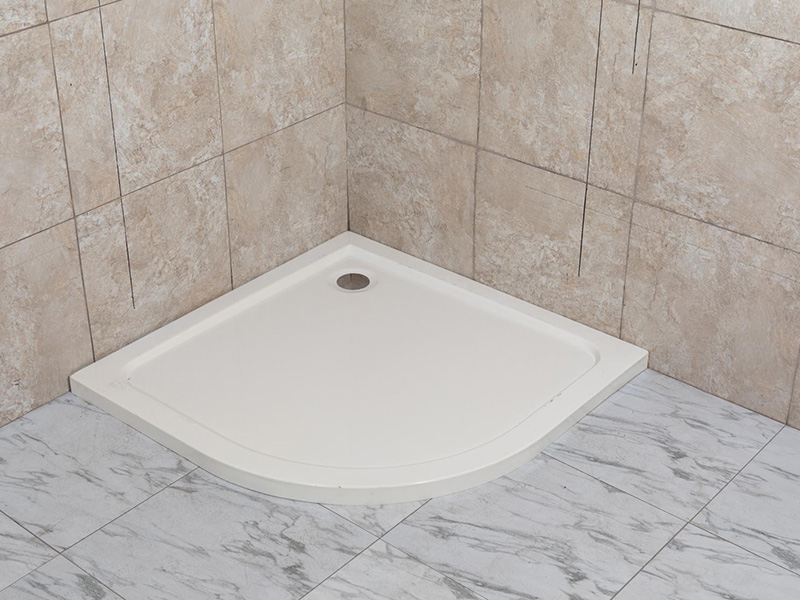
For combined tub-and-shower bathrooms specifically, bath shower screens for combined tub-and-shower setups are often the most budget-conscious option, since they avoid the floor pan and full-height framing that the other three types require.
Once the structural type is settled, the glass itself becomes the next decision point. Clear glass maximizes light and makes small bathrooms feel larger; frosted or textured glass trades some of that openness for privacy without needing a separate door or curtain. Low-iron glass removes the faint green cast that standard glass shows at thicker cuts — a small detail, but a visible one on 8-10mm frameless panels.
Regardless of frame style, the glass itself should be tempered (toughened) rather than annealed. Tempered glass is engineered to fracture into small, blunt fragments rather than large shards if it breaks — a meaningful difference in a wet, slip-prone environment. the EN 12150-1 standard for thermally toughened safety glass defines the tolerances, edgework, and fragmentation behavior that compliant glass must meet — a useful reference point when comparing quotes from different suppliers, since not all "tempered" glass on the market is tested to the same documentation standard.
Hardware quality matters just as much on frameless and semi-frameless types, where hinges and clamps are doing structural work rather than just cosmetic work. Stainless steel resists the corrosion that bathroom humidity accelerates in lower-grade alloys, and is worth specifying even if it adds modestly to the unit cost.
Start with the floor plan. If there's no room for a door to swing — common in alcove showers and smaller en-suites — sliding doors are the practical default regardless of how appealing a frameless pivot door looks in photos. If the bathroom is large enough to absorb a swing arc, pivot doors generally offer a wider, more comfortable entry and a tighter seal against drafts and splashes.
Budget shifts the frame-style decision more than it shifts the door-operation decision. Framed sliding doors remain the most economical full-enclosure option, while frameless pivot or walk-in designs sit at the premium end — the cost difference comes from thicker glass, tighter tolerances, and heavier-duty hardware rather than from the door mechanism itself.
Finally, think about who's cleaning it. Fewer frame channels and door tracks mean fewer places for soap scum and limescale to collect, which is why frameless and walk-in designs are often described as lower-maintenance — not because the glass itself is different, but because there's simply less hardware to clean around.
Sådan fortæller du, om glas er hærdet: forskelle, test og hvad du skal købe
Ovalt soveværelsesspejl: Vejledning til dimensionering, placering og styling
Din e-mailadresse vil ikke blive offentliggjort. Påkrævede felter er markeret *

 Tel: +86 13967167585
 E-mail:
Copyright 2023 Anhui D-MAN Smart Home Co., Ltd. All Rights Reserved Producenter af brusekabiner Brusebad Design Custom
